


What are the applications of geomagnetic sensors? The function of geomagnetic sensors is quite powerful: when the driver parks the vehicle in a parking space, the geomagnetic sensor can automatically sense the arrival of the vehicle and start a countdown; when the vehicle is about to leave, the sensor will automatically transmit the parking time to the relay station for billing. Therefore, solving the problem of low efficiency in parking fee collection was once one of the advantages of geomagnetic sensors.
2026-06-19
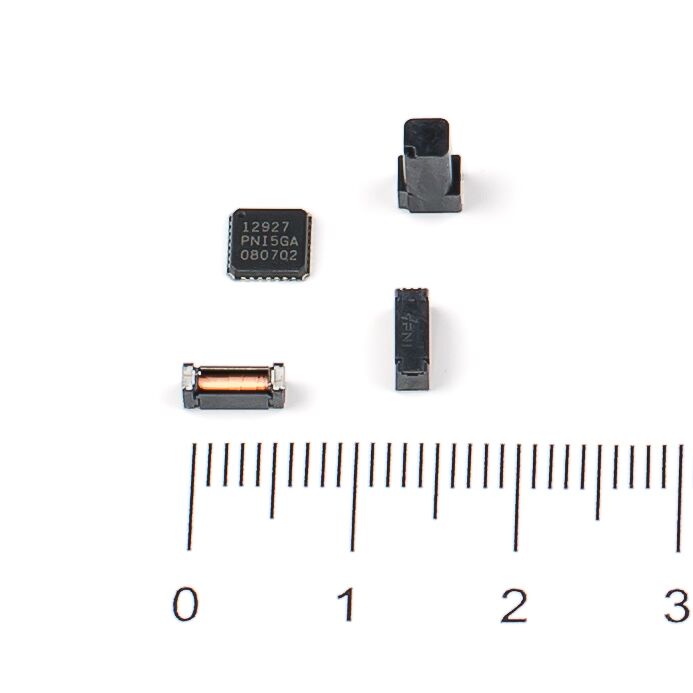
The function of the geomagnetic sensor is quite powerful: when the driver parks the vehicle in the parking space, the geomagnetic sensor can automatically sense the arrival of the vehicle and start a countdown; when the vehicle is about to leave, the sensor will automatically transmit the parking time to the relay station for billing. Therefore, solving the problem of low efficiency in parking fee collection was once one of the advantages of the geomagnetic sensor
Three antenna-like devices are erected on the side of the parking lot to receive and transmit sensor information. These three sensing devices can cover the entire parking area. Nowadays, with the development of geomagnetic sensors, magnetic sensors are being used in more and more fields. From aerospace to various sectors of the national economy, from medical and health care to many aspects of daily life, magnetic sensors are being utilized
The geomagnetic sensor can be used to detect the presence of vehicles and identify vehicle types. Compared to the commonly used geomagnetic coil (also known as inductive loop) detectors, sensors that utilize the impact of vehicles passing through the road on the Earth's magnetic field for vehicle detection have advantages such as small installation size, high sensitivity, minimal construction effort, long service life, and minimal damage to the road surface (wired installation only requires a 5mm wide slot to be cut in the road surface, while wireless installation only requires a hole with a diameter of 55mm and a depth of 150mm to be drilled in the road surface, and no damage to the road surface is required when installed on the hanger or side of the detection point). These advantages will undoubtedly play a very important role in the information collection of intelligent transportation systems
Nowadays, in order to alleviate the difficulties of travel and parking in big cities, geomagnetic sensors, a monitoring technology, have been widely applied in dynamic and static traffic supervision systems in many cities across the country. Many developers who are committed to the development of smart city technology have also begun to actively expand their applications in the field of urban traffic geomagnetic monitoring. For example, hundreds of sets of wireless geomagnetic vehicle detectors and supporting controllers have been installed in the East Lake Tunnel in Wuhan. By combining geomagnetic sensor technology with Zigbee technology, periodic reporting of traffic parameters such as traffic flow, speed, lane occupation duration, and occupancy rate in various sections of the tunnel has been achieved, enabling management departments to grasp the tunnel's traffic capacity in real time
It is reported that this tunnel traffic monitoring system consists of three parts: the front-end geomagnetic detection and collection, the geomagnetic receiving and forwarding, and the back-end monitoring platform. Among them, the geomagnetic sensor can effectively detect traffic data such as vehicle flow, speed, and headway
The geomagnetic sensor in the geomagnetic vehicle detector detects vehicles by sensing changes in the Earth's magnetic field. When a vehicle passes through the detection area where the geomagnetic vehicle detector is buried, it disturbs the Earth's magnetic field in the detection area, causing significant changes in the geomagnetic intensity. At this time, the geomagnetic sensor chip detects subtle changes, determines whether a vehicle has passed, and sends the detection signal to the receiving device installed on the roadside through wireless communication
In different applications, the installation locations of geomagnetic vehicle detectors vary, and their functions are also quite distinct. For instance, the geomagnetic vehicle detector located before the stop line at the entrance of an intersection is used to detect whether there are vehicles queuing up to pass through the intersection; the geomagnetic vehicle detector buried in the road section between two intersections is used to detect the traffic flow and driving speed of the lanes; and the geomagnetic vehicle detector at the exit of an intersection is used to detect whether there are vehicles stalled at the exit of the preceding intersection
<p>
The traffic data collected by geomagnetic sensors holds significant practical value. For instance, it can be fed into traffic signal machines at intersections to enable intelligent timing of red and green lights. It can also be utilized for traffic condition analysis to support traffic guidance dissemination. Furthermore, the pertinent data can be transmitted to the traffic management backend, providing a comprehensive historical and real-time traffic database to aid relevant management departments in traffic planning and scheduling decisions.
</p>
<p>
The text is sourced from <a class="UserLink-link" href="https://www.zhihu.com/people/hebeilanfeng" target="_blank">Lanfeng IoT</a>
</p>